
Contract Packaging vs. In-House: How to Know When It's Time to Outsource
Every growing brand reaches a crossroads: keep packaging in-house or hand it off to a contract packager?
It's not a simple decision. Your packaging operation might be running fine today but what happens when you land that club store deal, launch a subscription program, or need to scale for Q4? Suddenly, "fine" isn't good enough.
This guide breaks down the real factors that determine whether contract packaging makes sense for your business and what to look for if you decide to make the move.
What Exactly Is Contract Packaging?
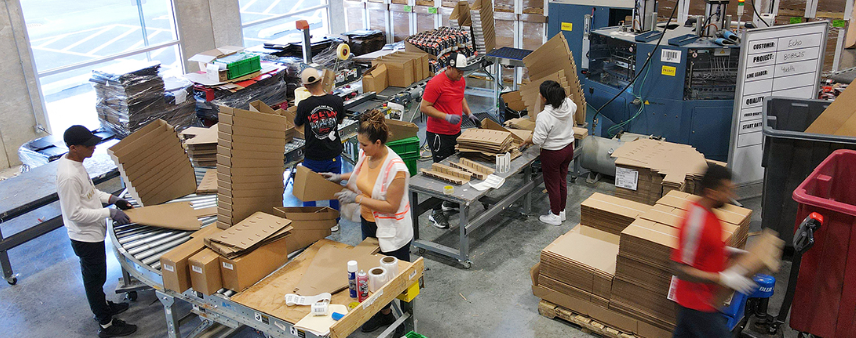
Contract packaging (also called co-packing) is when a brand outsources some or all of its packaging operations to a third-party facility. Instead of maintaining your own warehouse, equipment, and labor force, you send your product to a specialized facility that handles the work for you.
Services typically include:
• Kitting and assembly: combining multiple components into sellable units
• Packout: assembling retail displays and preparing products for shipment
• Fulfillment: pick, pack, and ship operations for e-commerce or retail orders
• Labeling and rework: applying labels, correcting quality issues, or repackaging
• Shrink wrapping, sealing, and bundling: value-added packaging services
The key distinction: a contract packager isn't just a warehouse that stores your stuff. They're an operational partner that actively handles your product often with specialized equipment, trained labor, and certifications you'd struggle to maintain on your own.
5 Signs It Might Be Time to Outsource
1. You're Turning Down Business Because You Can't Handle the Volume
This is the clearest signal. If you've had to decline orders, delay launches, or tell a buyer "we can't do that quantity" you've outgrown your current setup. A contract packager can provide immediate capacity without the 12-18 month timeline of building your own facility.
2. Seasonal Peaks Are Killing You
Q4 is brutal for consumer brands. If you're hiring temporary workers every holiday season, scrambling for warehouse space, and watching quality slip under pressure that's a structural problem. Contract packagers are built to flex. They maintain capacity specifically for clients who need to scale up (and back down) without the overhead.
3. You Need Capabilities You Don't Have
Club store packaging has specific requirements. Food products need temperature control and certifications. Subscription boxes require complex kitting operations. If a new opportunity demands capabilities outside your wheelhouse, you have two choices: invest heavily in equipment and training, or find a partner who already has it.
4. Your Team Is Doing Work That Isn't Their Job
When your marketing team is packing boxes and your operations manager is troubleshooting shrink wrap machines, something's wrong. Packaging shouldn't consume the attention of people whose skills are better used elsewhere. Contract packaging lets your team focus on what actually grows the business.
5. You're Expanding Geographically
Shipping everything from one coast to customers on the other is expensive and slow. A strategically located contract packager can cut transit times and freight costs significantly. This is especially relevant for brands entering the Midwest market or serving customers across multiple regions.
The Hidden Costs of Keeping It In-House
When brands compare in-house vs. outsourced packaging, they often undercount the true cost of doing it themselves. Here's what typically gets missed:
Facility costs: Rent, utilities, insurance, maintenance, property taxes. These don't flex with your volume you pay whether you're running at 30% or 100% capacity.
Equipment: Shrink tunnels, labeling machines, conveyor systems, forklifts. Plus maintenance, repairs, and eventual replacement.
Labor: Not just wages benefits, training, turnover costs, workers' comp, HR overhead. Temporary labor during peaks adds another layer of complexity.
Compliance: Maintaining certifications (BRC, FDA registration, organic handling) requires ongoing audits, documentation, and facility investments.
Opportunity cost: The deals you can't pursue, the speed-to-market you sacrifice, and the management attention diverted from core business activities.
A contract packager spreads these costs across multiple clients. You pay for what you use, when you use it.
What to Look for in a Contract Packaging Partner
Not all contract packagers are created equal. Here's what separates the good ones from the ones that will cause you headaches:
Relevant Certifications
If you're in food, pharma, or cosmetics, certifications aren't optional. Look for BRC (food safety), GMP(manufacturing practices), and FDA registration. For high-value products, TAPA certification indicates serious security protocols. Don't assume ask for documentation.
Capacity That Matches Your Needs
A facility that's too small will struggle to handle your peaks. One that's too large may not prioritize your business. Ask about current utilization, flex capacity, and how they handle seasonal surges. The best partners can scale with you as you grow.
Experience in Your Category
A packager who's done 50subscription box programs will understand challenges a generalist won't anticipate. Ask for references in your specific category club store, e-commerce, retail displays, whatever matters for your business.
Technology and Visibility
Can you see your inventory in real-time? Do they support EDI for seamless order integration? Is there lot traceability for compliance and recalls? In 2026, a contract packager without modern systems is a liability.
Location Strategy
Where a facility sits matters. Central locations reduce average shipping distances and transit times. If you're importing product, a packager who can receive direct from port eliminates an entire leg of handling. Think about where your customers are, not just where you are.
When In-House Still Makes Sense
Contract packaging isn't right for everyone. Keeping operations in-house may be the better choice if:
• Your volume is low and consistent If you're packing a few hundred units a week with no peaks, the overhead of managing a partner relationship may not be worth it.
• Packaging is your core competency Some brands have built proprietary packaging processes that are genuinely difficult to replicate. If your packaging IS the product differentiation, keep control.
• You have excess capacity you're already paying for If you own a facility with unused space and idle workers, it may make sense to utilize that asset before paying someone else.
• Quality control requires hands-on oversight Some products are so sensitive or high-value that you need eyes on every unit. Though good contract packagers can meet exacting standards, some brands prefer direct control.
The honest answer for most growing brands: you'll likely use a hybrid approach. Keep some operations in-house for control and flexibility, and partner with a contract packager for overflow, specialized capabilities, or geographic reach.
Questions to Ask Before You Commit
Before signing with any contract packager, get clear answers to these questions:
1. What's your minimum order size? Make sure their floor matches your reality, especially for initial orders.
2. What's the typical lead time? From receipt of materials to ship-ready, how long does it take? What about rush orders?
3. How do you handle quality issues? Do they have rework capabilities? What's the process when something goes wrong?
4. Can I tour the facility? Any reputable packager will welcome a site visit. If they won't let you see the operation, that's a red flag.
5. Who will be my day-to-day contact? You want a dedicated point person, not a call center.
6. What happens if you can't meet a deadline? Understand their contingency plans and communication protocols.
7. Can you share references from similar clients? Talk to brands in your category who've worked with them for at least a year.
The Bottom Line
Contract packaging isn't about admitting you can't do it yourself. It's about recognizing that specialized partners can often do it better, faster, and more cost-effectively freeing you to focus on what actually differentiates your brand.
The decision ultimately comes down to math and strategy. Run the real numbers (including the hidden costs).Consider where you want to be in three years, not just where you are today. And if you do decide to partner with a contract packager, invest the time to find one who understands your business and operates at the standard your brand demands.
The right partner doesn't just pack your products they become an extension of your operations team.
Looking for a contract packaging partner?
The Specialized Packaging Marketplace is proud to partner with Bay Cities' Midwest Packout Division and recommends them highly. Not all contract packaging and fulfillment companies are the same.
Bay Cities is a 100% employee-owned direct manufacturer of retail packaging, POP displays, and packout services. Preferred vendor at major retailers.


Ready to find your packaging partner?
Join hundreds of manufacturers and buyers already using PackageLink to streamline their sourcing process.