Why Clean Label Is a Packaging Problem, Not a Recipe Problem
Regulators are pulling synthetic dyes and additives from the food supply by the end of 2026. Removing the chemicals is the easy part. Here is the shelf-life problem nobody warns you about, and the aseptic answer.
Something shifted in the food aisle, and most brand owners are only seeing half of it.
The headlines are about ingredients. Synthetic dyes. Additives. The chemicals coming out of cereal, candy, sauces, and drinks. That part is real, and it is happening on a clock. But there is a second half to this story that almost nobody is talking about, and it is the half that lands on your P and L.
When you pull the chemicals out, you also pull out the thing that was quietly holding your shelf life together. Clean label is not a recipe problem. It is a packaging problem. And the answer has been sitting in a corner of the industry that almost nobody writes about.
I have spent thirty-five years in specialized packaging. Here is what the clean-label wave actually means for anyone who makes a sauce, a juice, a gravy, a drink, or a baby food, and what you need to understand before your next production run.
What is actually changing in the food aisle right now?
The FDA and HHS have moved to phase petroleum-based synthetic dyes out of the food supply, with a target to have them gone by the end of 2026. Red No. 3 is already on the way out. There are nine of these dyes on the list, the ones behind the bright reds, yellows, blues, and greens on the shelf. At the same time, regulators are tightening the GRAS rule, the old standard that let companies certify their own additives as safe without showing the work.
You can argue the science all day. That is not the point for a brand owner. The point is that the rules are changing on a deadline, and your shopper is now reading the back of the package. Whatever you think of the politics, the market has already decided it wants a cleaner label. That demand is not going back in the box.
Why is removing the chemicals the easy part?
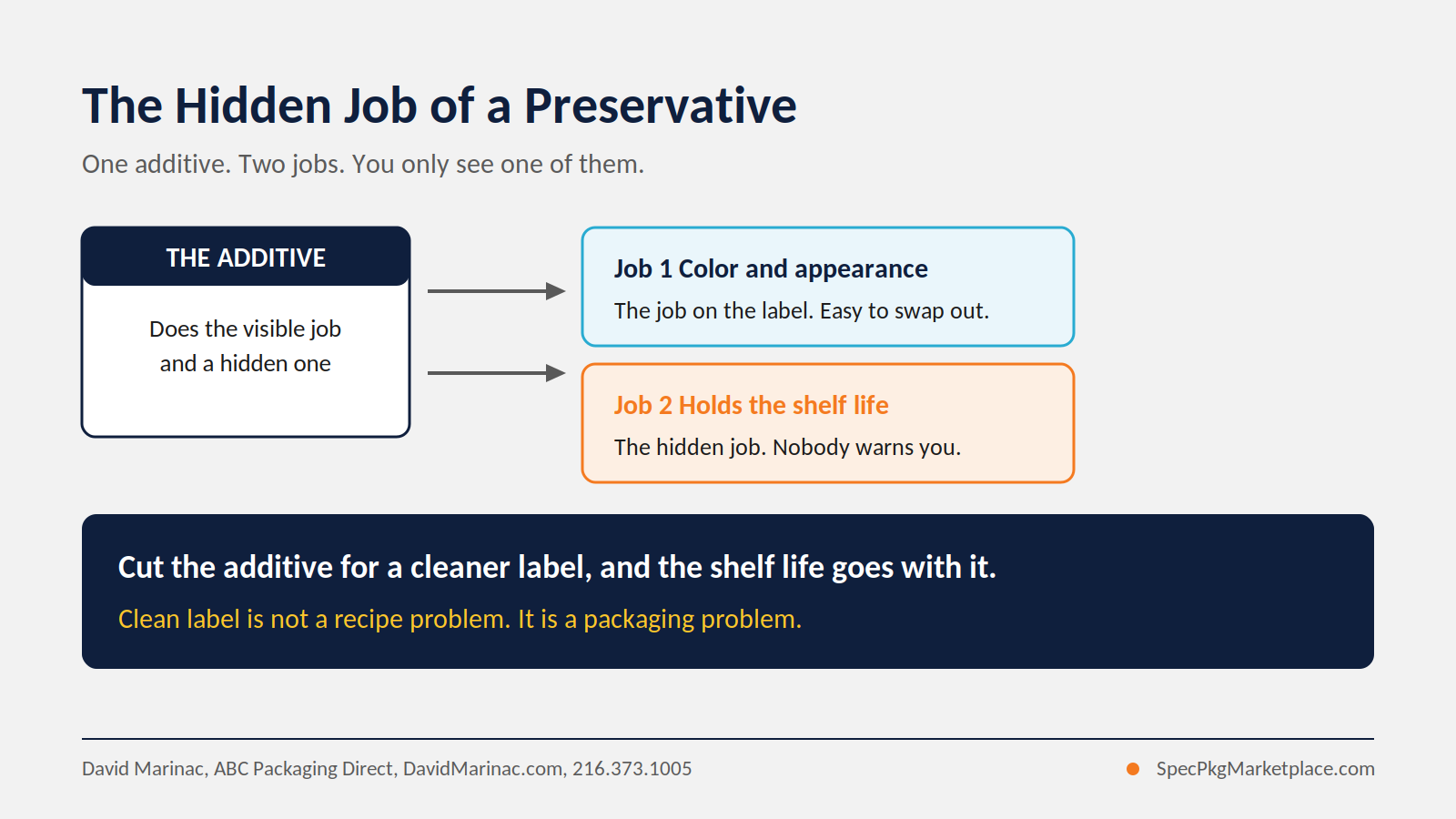
Here is the trap. Reformulating to drop a dye or a preservative feels like a recipe change. Swap the color, cut the additive, done. Except a lot of those additives were doing a second job. They were holding shelf life. Preservatives keep product stable on a warm shelf for months. Take them out, and the clock on your product starts ticking the moment it leaves the line.
So now you have a cleaner label and a product that spoils. That is the problem nobody warns you about. It is the exact moment where most brands either give up, go back to refrigeration, which wrecks their distribution, or reach for a different additive and land right back where they started.
There is a better answer, and it is not a recipe. It is a process and a package.
What actually keeps food shelf-stable without preservatives?
The answer is aseptic.
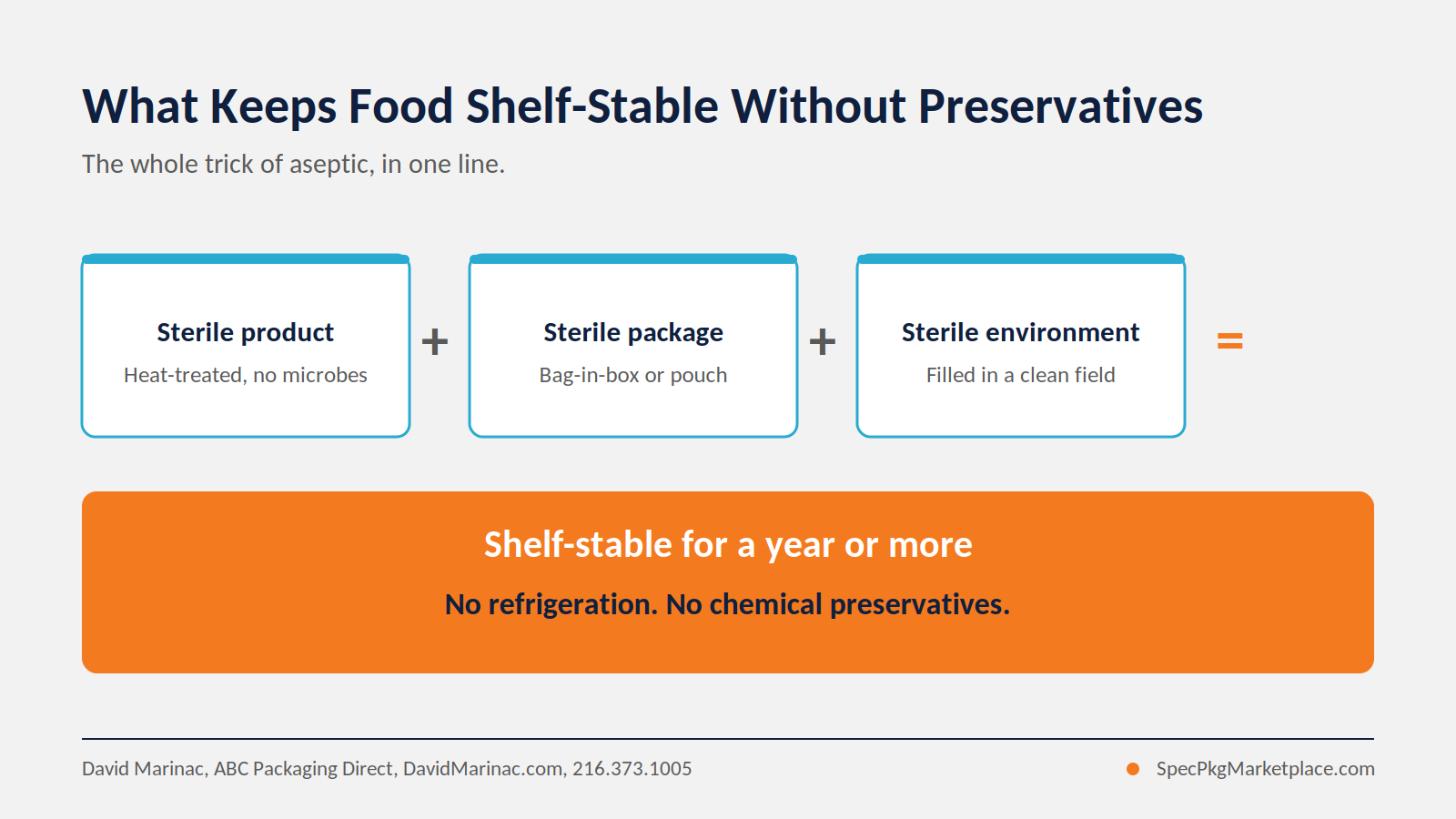
Aseptic is simple to say and hard to do. You sterilize the product. You sterilize the package. You bring them together in a sterile environment. Nothing living goes in, so nothing grows. The result is a product that sits on a shelf for a year or more with no refrigeration and no chemical preservatives doing the heavy lifting.
That is the whole trick. Shelf stability without the chemicals. It is how the juice pouch in a kid's lunchbox stays good in a hot car. It is how shelf-stable plant milk and broth and baby food work. And because the better aseptic methods use fast, gentle heat instead of the long, brutal cook of old-style canning, the product keeps more of its flavor, color, and nutrients. Cleaner label, longer life, better taste. That is why aseptic is suddenly standing in the middle of the biggest food story in the country.
Who are the players you actually have to understand?
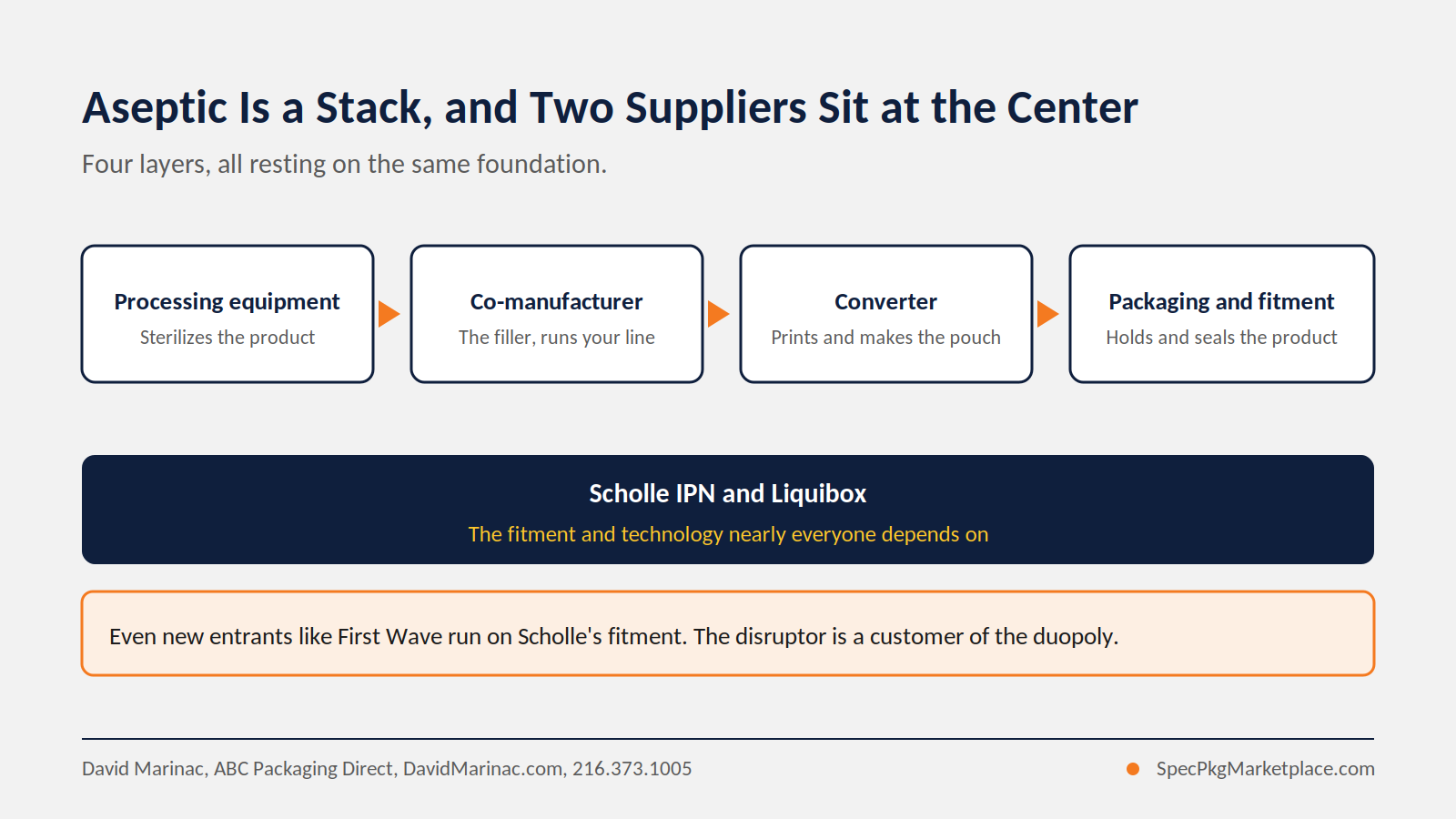
This is where brand owners get lost, because aseptic is not one company you call. It is a stack, and each layer is a different business.
There is the processing technology, the equipment that sterilizes your product. There are the co-manufacturers, the contract fillers who run your product on their aseptic lines so you do not have to build a plant. There are the converters who print and make the pouch. And there is the packaging itself, the bag-in-box and the spouted pouch and the fitment, the part that actually holds your product and keeps it sealed.
Here is the detail that tells you everything about this market. Even the new disruptors depend on the same few packaging suppliers. A funded NC State spinoff, First Wave, has built a whole low-volume aseptic filling business for emerging brands, and it still runs on Scholle's fitment and filling technology. The busy newcomer is a customer of the same duopoly everyone else buys from. Scholle IPN and Liquibox sit at the center of this niche, and almost everything flows through them.
That matters to you because the choke point is real. When two suppliers own the layer everyone depends on, mid-market buyers get long lead times, high minimums, and thin service. The technology is ready for the clean-label wave. The supply relationships are where brands get stuck.
What does this actually cost, and where do brands get stuck?
The honest answer is that it depends, and anyone who quotes you a clean number before understanding your product and your volume is guessing. But the real cost is rarely the one on the quote. It is the minimum order you cannot meet. It is the lead time that misses your launch. It is the second source you do not have when your one supplier stumbles.
This is the part I have watched trap good companies for thirty-five years. It was never really about price. It was about fear of switching, and about not knowing the questions to ask. The deal you never made does not show up on your P and L, but it is costing you all the same.
Where do you start?
If you are reformulating for clean label, start before you have a spoilage problem, not after. Understand the stack. Know the difference between a co-packer and a packaging supplier. Get a real read on cost and minimums. And do not accept that your current supplier is your only supplier.
We are building the independent, honest-broker guide to this whole niche on the Specialized Packaging Marketplace. Start here:
- Scholle vs Liquibox, an honest comparison
- Alternatives to Scholle and Liquibox
- How a Southeast dairy processor fixed its supply problem
If you want a straight answer on your specific product, reach out. No pitch, just thirty-five years of read on where the traps are. dmarinac@davidmarinac.com
David Marinac, ABC Packaging Direct, DavidMarinac.com, 216.373.1005

Ready to find your packaging partner?
Join hundreds of manufacturers and buyers already using PackageLink to streamline their sourcing process.